Smart energy and storage
Battery energy storage
BESS specified to backup duration and clearances, with safety documentation—not whole-home theatre by default.
Who this is for
Households · Commercial facilities · Public-sector campuses
Iran (Full calculator support) · Other markets (Discovery / consultation)
Included
- Siting and capacity intent
- Safety document pack as applicable
What you leave with
- Storage specification
Not included
- Unlimited backup duration
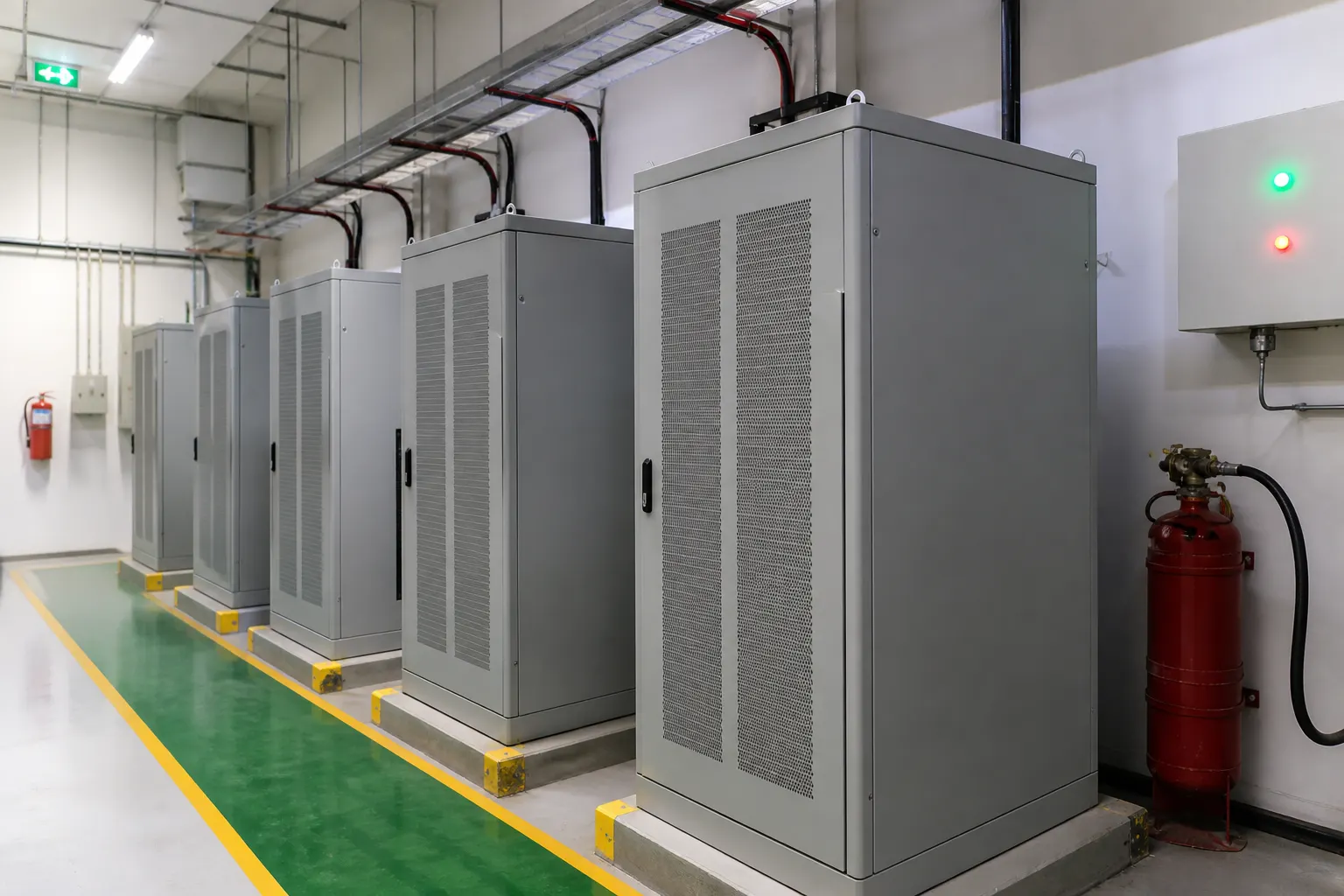
Battery systems are sized to the written critical-load list and backup-hours goal. Whole-home coverage is an explicit option. We discuss location, ventilation, and fire-safety documentation without inventing warranty terms that are not in the claims register.
Who this is for: Households; Commercial facilities; Public-sector campuses. Markets: Iran (Full calculator support); Other markets (Discovery / consultation).
Problems we help you name: Cabinets placed in egress paths.
A typical engagement includes Siting and capacity intent; Safety document pack as applicable. It does not include Unlimited backup duration.
You provide Load ranking; Preferred equipment rooms. You leave with Storage specification.
1. Prioritize: Name the loads, duration, and control points that matter. 2. Integrate: Connect storage, charging, or monitoring to that plan. 3. Prove: Show backup and coordination behavior in a labeled commissioning script.
Related services
Related reading
Related questions
Where can a home battery be installed?
Location depends on manufacturer clearances, ventilation, and local rules. We document siting during design and do not place cabinets in egress paths. Warranty language on this site only appears when an approved claim is in date; otherwise we point you to the contract pack.
How should we choose backup hours at home?
Start with a short critical-load list—typically lighting, refrigeration, communications, and any medical devices you actually use—and a duration you can live with. Whole-home coverage is a larger, explicit scope. The home resilience calculator explores ranges; a feasibility study writes the list you will design against.